Uniswap: The Complete Protocol Guide for 2026

If you have spent any time in crypto, you have almost certainly encountered Uniswap without necessarily knowing what it is. The token you bought on some interface, the liquidity pool your yield farming rewards came from, the price feed that powered a DeFi protocol you used — a significant portion of DeFi activity touches Uniswap infrastructure at some point.
This guide explains what the protocol actually is, how it works at a mechanical level, how the three main versions differ, and how to use it practically through app.uniswap in 2026.
Core Mechanics of the Uniswap Protocol

Uniswap is not a company that runs a trading service. It is a set of smart contracts deployed on public blockchains that anyone can interact with at any time. No operator controls it, no server runs it, and no approval is needed to use it. Understanding this distinction is the foundation of understanding everything else about how the protocol behaves.
How Uniswap Exchange Works Without a Central Authority
Traditional exchanges work by maintaining order books: lists of buy and sell orders from users, matched by the exchange's matching engine. The exchange holds custody of funds during trading, decides which assets can be listed, and can freeze accounts or reverse transactions.
The uniswap exchange operates on an entirely different model called an automated market maker. Instead of matching buyers and sellers, it uses liquidity pools: smart contracts holding two tokens that anyone can swap between. The price is determined by a mathematical formula based on the ratio of tokens in the pool. No order book, no matching engine, no custodian.
When you swap ETH for USDC on the platform, you send ETH to a smart contract and receive USDC back in the same transaction. The contract calculates how much USDC to give you based on the current token ratio and the constant product formula. Nobody processes your trade. The math does.
This architecture means the protocol cannot be shut down by any single entity, cannot freeze your funds, and cannot reject your transaction. It runs as long as Ethereum runs, which is to say indefinitely.
Uniswap v2 as the Original AMM on uniswap.org
Uniswap v2 was not the first decentralized exchange but it was the first to achieve mass adoption. When it launched in May 2020, it brought three capabilities that transformed the space: direct ERC-20 to ERC-20 swaps without routing through ETH, permissionless pool creation for any token pair, and on-chain price oracles.
The permissionless pool creation was the feature that changed everything. Any developer could deploy a token and create a trading pair for it immediately, without negotiating with any exchange or paying listing fees. This is why the DeFi explosion of 2020 and 2021 happened on Uniswap: it was the only venue where any token could trade the same day it launched.
The technical documentation, contract addresses, governance information, and audit reports for uniswap v2 are all available through uniswap.org, which serves as the canonical reference for the entire protocol history including all subsequent versions.
Uniswap DEX Deployments Across Chains in 2026
The protocol is no longer limited to Ethereum mainnet. The uniswap dex is deployed across a growing list of networks in 2026, including Ethereum mainnet, Arbitrum, Base, Optimism, Polygon, BNB Chain, and several other layer 2 networks and alternative chains.
Each deployment is a separate set of smart contracts on its respective chain, but the user experience through app.uniswap is consistent across all of them. You switch networks in your wallet, and the interface automatically loads the relevant pools and positions for that chain.
Gas costs vary dramatically between deployments. A swap on Ethereum mainnet during high congestion can cost $20 to $50 in gas. The same swap on Arbitrum or Base typically costs cents. For active traders and liquidity providers who need to make frequent transactions, layer 2 deployments have become the practical default.
Protocol Versions: v2, v3, and v4
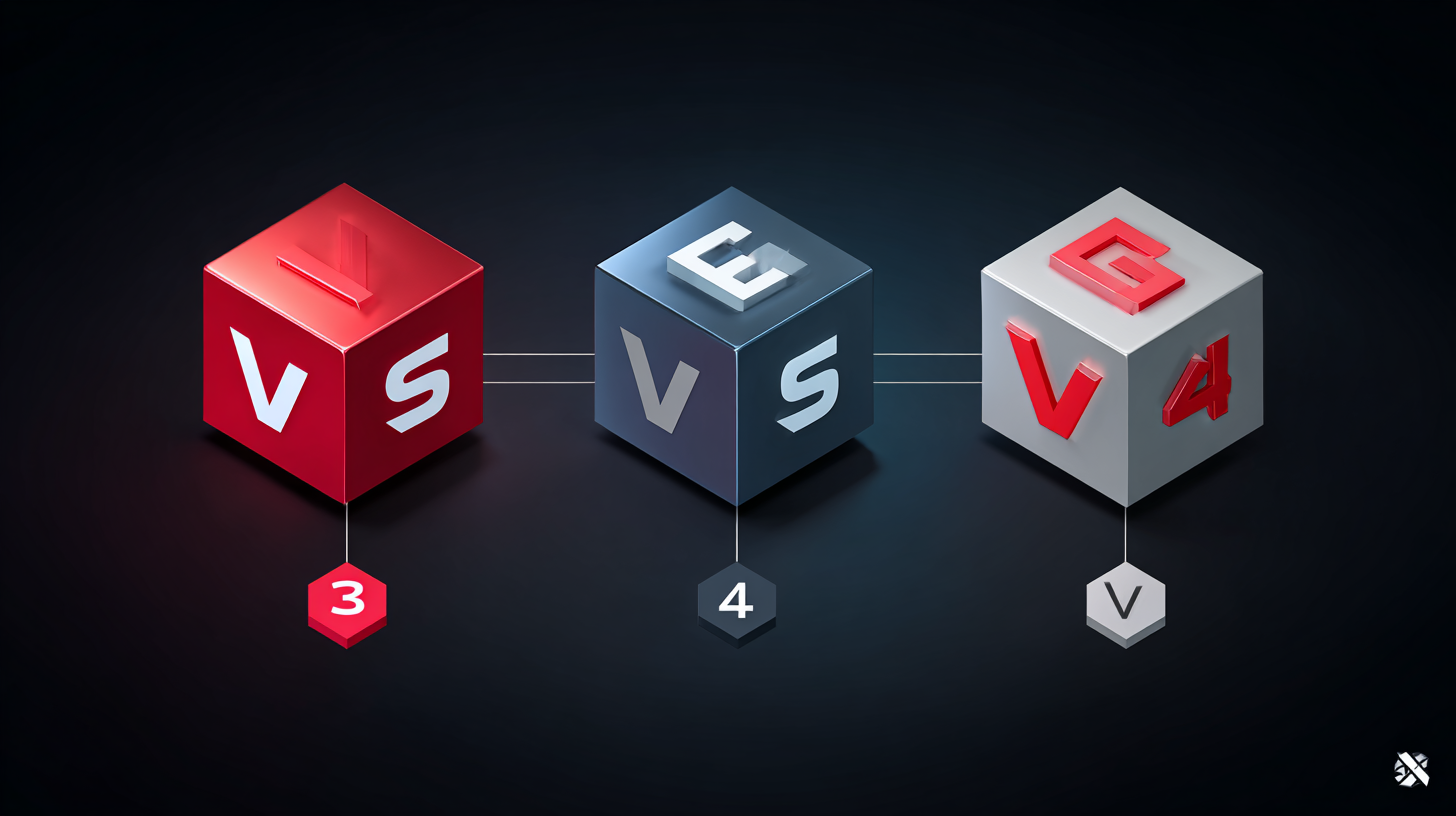
The protocol has gone through three major versions, each adding significant capabilities while the previous versions remained active. All three are accessible through app.uniswap, and the routing engine uses all of them simultaneously when finding the best execution for a swap.
What Changed From Uniswap v2 to Uniswap v3
Uniswap v3 launched in May 2021 with one central innovation: concentrated liquidity. In uniswap v2, every liquidity position covers the full price range from zero to infinity. Capital is spread uniformly across all possible prices, which means most of it sits idle at prices far from where the market is actually trading.
Uniswap v3 allows providers to concentrate their capital within a specific price range they choose. If you provide liquidity to an ETH/USDC pool and set a range of $2,000 to $3,000, your capital only activates when ETH trades within that band. While active, your position earns a much larger share of fees than the same capital would in a v2 pool, because you are providing all your depth to a narrow slice of the price spectrum rather than spreading it across all prices.
The tradeoff is management complexity. A v3 position that goes out of range earns nothing and requires the provider to either wait, close the position, or rebalance to a new range. V2 positions are passive by nature and earn continuously regardless of price movement.
Uniswap v3 also introduced multiple fee tiers: 0.01%, 0.05%, 0.3%, and 1%. Stablecoin pairs typically use the lowest tier. Standard volatile pairs use 0.3%. Exotic pairs with high risk use 1%. This allows fee income to better reflect the actual risk profile of different pairs.
What Uniswap v4 Added With Hooks
Uniswap v4 introduced a fundamentally different architecture. Where v2 and v3 deploy a separate contract for each trading pair, v4 uses a singleton contract that manages all pools in a single deployment. This reduces gas costs significantly for multi-pool routes because token transfers between pools in the same transaction no longer require separate contract calls.
The headline feature of v4 is hooks: custom smart contract logic that can be attached to a pool and executed at specific points in the swap or liquidity lifecycle. A hook can run before a swap, after a swap, before liquidity is added, or after it is removed. This allows developers to build custom behaviors directly into pools: dynamic fees that adjust based on volatility, on-chain limit orders, time-weighted average market making, and other features that previously required separate protocol layers.
For most traders and casual liquidity providers, v4 is a background improvement. App.uniswap routes through v4 pools when they offer better execution, but the user experience is essentially the same as interacting with v3. The benefits are most visible for developers building new DeFi products on top of the protocol and for sophisticated LPs who want to implement custom strategies.
Which Version to Use on app.uniswap
For traders, the version question is irrelevant. App.uniswap evaluates all versions simultaneously for every swap and routes through the best combination automatically. You do not choose which version processes your trade.
For liquidity providers, the choice matters. A practical framework:
Situation | Recommended Version |
Passive provider, no monitoring | Uniswap v2 |
Active provider, stable pair | Uniswap v3 with tight range |
Active provider, volatile pair | Uniswap v3 with wider range |
Developer building custom logic | Uniswap v4 via hooks |
New token launch | Uniswap v2 for simplicity |
Large treasury, no active management | Uniswap v2 |
The general rule is that v3 earns more per dollar of capital for providers who manage their positions actively, while v2 earns more consistently for providers who want to deposit and leave.
Uniswap Pools and Liquidity

Every swap on the platform executes against a pool. The depth of that pool determines the price you get. Understanding how pools are funded and how fees flow through them is essential context for both traders and providers.
How Pools Are Funded by Liquidity Providers
Liquidity providers deposit tokens into pools through the Pools tab on app.uniswap. For a uniswap v2 pool, you deposit equal dollar values of both tokens and receive LP tokens representing your share. For uniswap v3, you also specify a price range.
There is no minimum deposit and no approval process. Anyone with tokens can provide liquidity to any pool, or create a new pool for any pair that does not yet exist. The protocol accepts all capital equally.
Providers take on two categories of risk in exchange for fee income. The first is market risk: the value of the tokens in your position fluctuates with market prices. The second is impermanent loss: the pool rebalances continuously as prices change, and the rebalancing systematically moves away from whichever token is appreciating. If you provide ETH and USDC and ETH doubles in price, you end up with less ETH than you deposited because arbitrageurs bought ETH from your pool while adding USDC.
Fee income is the return that compensates providers for these risks. On high-volume pairs, fees can comfortably exceed impermanent loss over time. On low-volume pairs, the math often favors simply holding the tokens rather than providing liquidity.
Fee Distribution Across the Uniswap Liquidity Pool
Every swap generates a fee paid in the input token. On uniswap v2, this fee is added directly to the pool reserves, automatically increasing the value of every LP token proportionally. On uniswap v3, fees accumulate separately and must be claimed manually.
Fee income per provider scales with their share of the pool and the total volume the pool processes. A provider holding 1% of a pool that processes $1 million in daily volume at 0.3% earns $30 per day before gas costs. The same provider in a pool that processes $10 million earns $300. Volume is the dominant variable: pool depth and fee tier matter, but nothing matters more than how much trading activity passes through the pool.
Key factors that determine fee income for liquidity providers:
- Total trading volume through the pool
- Your percentage share of pool liquidity
- Fee tier of the pool
- For v3: whether your position is in range
- Duration of your position in the pool
v2 Full-Range vs Uniswap v3 Concentrated Positions
The core practical difference between v2 and uniswap v3 from a provider perspective comes down to capital efficiency and management burden.
In a uniswap v2 pool, your capital covers all prices uniformly. At any given moment, a large fraction of your capital is sitting at prices far from the current market, earning nothing from that moment's trades. Your share of fees from any trade equals your share of total pool capital, regardless of where the trade executes in price space.
In a uniswap v3 concentrated position, your capital is active only within your chosen range. If you concentrate $10,000 within a 10% price band around the current price, you might be providing the equivalent depth of $100,000 in a v2 pool within that band. Your share of fees from trades within that range is correspondingly larger.
The catch is that as soon as the price exits your range, your position earns nothing. A tight range that generates excellent returns in a calm market becomes an idle single-token holding after a significant price move. Active management of v3 positions, including regular monitoring and rebalancing when ranges go stale, is the cost of capturing the capital efficiency premium.
Using Uniswap Exchange on app.uniswap
App.uniswap is the official interface for the protocol, maintained by Uniswap Labs. It provides access to every version of the protocol, handles routing automatically, and includes the security features that matter when interacting with significant amounts of value.
Uniswap Login and Wallet Connection
Uniswap login is not a traditional login. There is no account, no email, and no password. Connecting a wallet on app.uniswap authorizes the interface to read your on-chain state and propose transactions for your signature. Your wallet address is your identity on the platform.
Navigate to app.uniswap directly by typing the address. Never follow links from social media, messaging apps, or emails. Phishing sites that clone the interface exist and are specifically designed to steal funds from users who do not verify the URL.
Click the connect wallet button and choose your wallet from the supported list. After connecting, your address appears in the top right corner and your token balances load in the swap panel. The connection does not grant the interface authority to move your funds. Every transaction still requires your manual approval in your wallet.
Swapping Uniswap Crypto on the Uniswap Interface
The swap panel on the uniswap interface shows two token selector fields. Select the token you want to sell in the top field and the token you want to buy in the bottom field. Enter the amount, and the interface returns a live quote from the best available route across all uniswap pools and protocol versions.
For tokens not on a verified token list, the interface shows an import warning. This is an important signal. Always verify the contract address of any unverified token from the project's official source before importing. Scam tokens frequently copy the names and symbols of legitimate projects.
The route display below the swap quote shows exactly which pools your trade passes through. For common pairs this is usually a single pool. For less liquid pairs or large trades, the route may split across multiple pools to minimize price impact.
Reading Quotes and Confirming Trades
Before confirming any swap on the uniswap exchange, review three numbers: the expected output, the minimum output given your slippage setting, and the price impact. The difference between expected and minimum output represents the worst case scenario given current slippage tolerance. The price impact shows how much your specific trade moves the pool price, which is a direct measure of how much worse than the mid-market price you are receiving.
For swaps showing price impact above 2%, consider whether the size of the trade is appropriate for the pool depth. Splitting a large trade into smaller transactions or using a DEX aggregator that spreads the order across multiple pools can reduce the total impact significantly.
After reviewing, click swap and confirm in your wallet. The transaction typically executes within 15 to 30 seconds on most networks.
The Broader Uniswap Ecosystem

The protocol itself is one component of a broader ecosystem of official tools designed to make self-custody crypto management practical across different devices and use cases.
Uniswap Wallet and Uniswap App for Mobile Self-Custody
The uniswap wallet is the official mobile application for iOS and Android. It is a self-custody wallet, meaning private keys are generated on your device and never transmitted to any server. The uniswap app integrates directly with the protocol and supports swapping, liquidity management, and portfolio tracking from mobile.
For users who want a single application that handles everything from daily trading to pool management without switching between multiple tools, the uniswap wallet covers most use cases natively. It connects to app.uniswap when needed for more complex operations and displays all on-chain positions and balances in a unified mobile interface.
Setting up the uniswap wallet requires generating or importing a seed phrase, setting a PIN or biometric lock, and verifying the backup before use. The setup flow takes about five minutes and results in a fully functional self-custody wallet connected to the full Uniswap protocol infrastructure.
Uniswap Extension for Browser Access
The uniswap extension is the official browser wallet for desktop users who prefer not to use MetaMask or other third-party extensions. It installs in Chrome and compatible browsers and appears in the wallet connection list on app.uniswap immediately after installation.
The extension includes transaction simulation, which shows what a transaction will actually do before you sign it. For token approvals and swaps, this displays the exact tokens leaving your wallet and what you receive in return. This feature makes it significantly harder for malicious transaction data to deceive you about what you are signing.
For users who primarily interact with app.uniswap and want a streamlined single-tool setup, the uniswap extension eliminates the need for any third-party browser wallet while staying within the official Uniswap product suite.
Uniswap Bridge for Cross-Chain Movement
The uniswap bridge is accessible directly from app.uniswap and allows moving assets between Ethereum mainnet and supported layer 2 networks without leaving the interface. Supported destinations include Arbitrum, Base, Optimism, and other major layer 2 networks.
Moving assets to layer 2 typically settles within minutes and costs minimal fees. Moving assets back to Ethereum mainnet through native rollup bridges takes up to 7 days for optimistic rollups due to the fraud proof window. Fast withdrawal services exist for users who need mainnet access quickly.
The bridge is particularly useful for liquidity providers who want to manage uniswap v3 positions on layer 2 networks. The ability to actively rebalance ranges, collect fees, and adjust positions without paying mainnet gas costs makes active LP management economically viable for positions of any size.
FAQ
What is the difference between uniswap v2 and uniswap v3?
Uniswap v2 uses full-range liquidity where every provider covers all prices and earns fees automatically. Uniswap v3 uses concentrated liquidity where providers choose a price range, earning more when active but nothing when out of range.
Do I need to create an account to use the platform?
No. There is no account, email, or password. Connect a wallet to app.uniswap and you can trade immediately. Uniswap login is just wallet connection.
Is the protocol available on networks other than Ethereum?
Yes. The uniswap dex is deployed on Arbitrum, Base, Optimism, Polygon, BNB Chain, and other networks. App.uniswap supports all of them through the network selector in the interface.
What is the uniswap wallet and do I need it?
The uniswap wallet is the official mobile self-custody app for iOS and Android. You do not need it specifically: any supported wallet works with the protocol. But it provides native integration with app.uniswap and the full protocol ecosystem.
What are hooks in uniswap v4?
Hooks are smart contracts that attach to v4 pools and execute custom logic at specific points in the swap or liquidity lifecycle. They allow developers to build features like dynamic fees, on-chain limit orders, and custom market making strategies directly into pools.
How do I move assets between Ethereum mainnet and layer 2?
Use the uniswap bridge accessible from app.uniswap. Select your source and destination network, the asset, and the amount. The interface shows fees and estimated arrival time before you confirm.